

Reading a WHOIS/RDAP record like a fraud analyst
A guided walk through the fields that matter and the ones you can safely ignore.
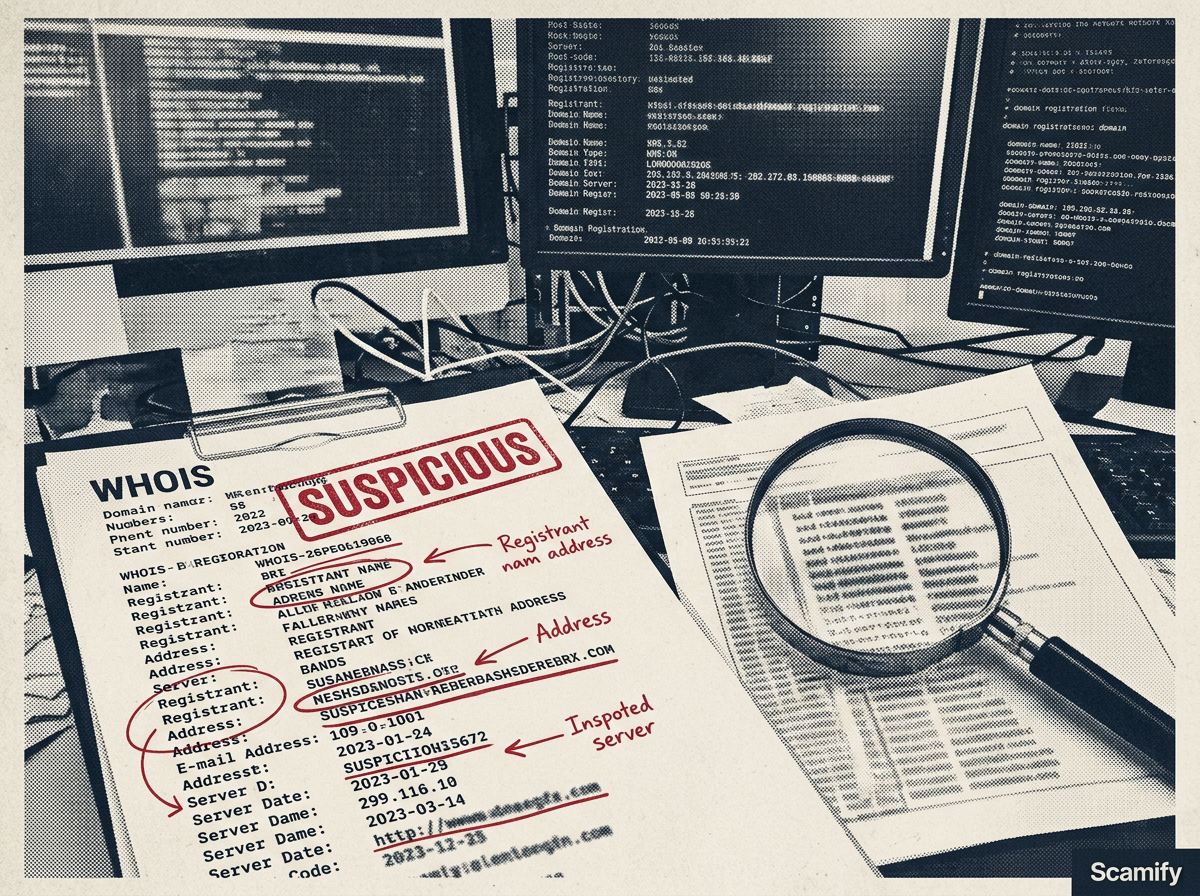
Modern registration data comes in two flavours: the legacy WHOIS text blob and the structured RDAP JSON that Scamify queries directly. Both expose the same core fields.
The fields that carry weight: creation date (age), expiration date (short expiries are a churn tell), registrar (some are chronically abused), status codes (clientHold, serverHold, pendingDelete are hard red flags), and nameservers (a single-domain nameserver cluster with no other tenants is unusual for a legitimate business).
Privacy-proxy registration is not fraud on its own — many legitimate owners hide personal data — but combined with a fresh domain on a risky TLD it moves the needle. Analysts think in patterns of signals, not single fields.